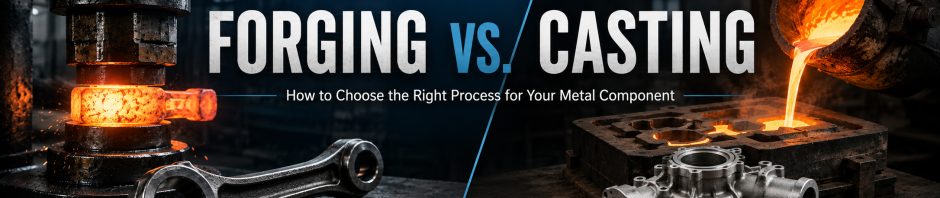
When sourcing a custom metal component, selecting the right manufacturing process can have a significant impact on performance, cost, lead time, and long-term reliability. Two commonly considered processes are forging and casting.
Both methods can produce durable, high-quality metal components, but they achieve the final part in very different ways. Forging shapes metal through controlled pressure, while casting begins with molten metal that is poured or injected into a mold.
So, how do you determine which process is right for your application?
The answer depends on factors including the component’s geometry, mechanical requirements, material, production quantity, tolerances, size, weight, and operating environment.
Forging vs. Casting at a Glance
| Consideration | Forging | Casting |
|---|---|---|
| Strength and fatigue performance | Often preferred for demanding loads and repeated stress | Application, alloy, and casting-process dependent |
| Complex geometry | Moderate to high | Excellent |
| Internal cavities | More limited | Excellent |
| Near-net-shape capability | Yes | Yes |
| Tooling | Often required | Depends on casting process |
| Production volume | Low to high depending on method | Low to very high depending on method |
| Secondary machining | Often required | Often required |
| Material options | Broad, but process dependent | Broad, but process dependent |
| Typical advantage | Mechanical performance | Geometric flexibility |
What Is Metal Forging?
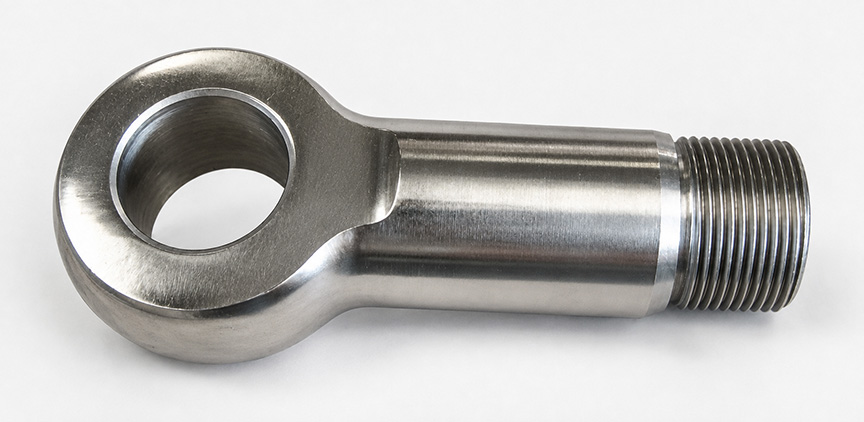
Forging forms metal by applying compressive force to heated or, in some cases, cold material. Rather than melting the metal, the material is mechanically shaped into the required form.
Common forging methods include:
- Closed-die forging, where metal is formed between dies containing the desired part geometry
- Open-die forging, where the material is progressively shaped between relatively simple dies
- Other specialized forging processes designed around the size, geometry, material, and performance requirements of the component
When properly engineered, controlled deformation during forging can develop favorable grain flow that follows the general contour of the component, which can improve strength, toughness, and fatigue resistance.
For this reason, forged metal components are frequently considered for applications involving significant loads, repeated stress, impact, or demanding operating environments.
What Is Metal Casting?
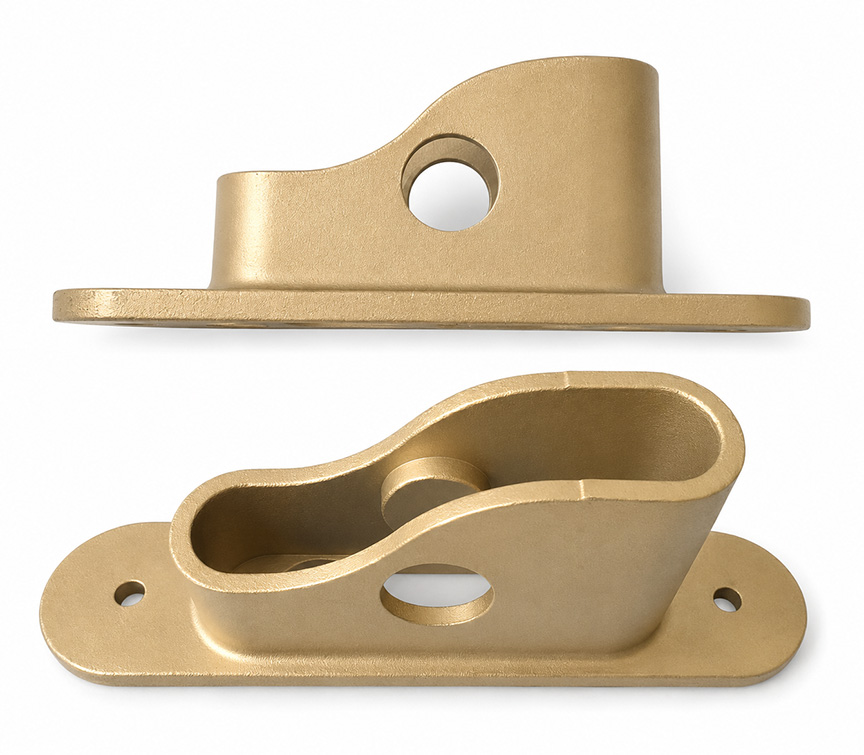
Casting takes a different approach. Metal is melted and introduced into a mold or die, where it cools and solidifies into the desired shape.
Common casting processes include:
Each process offers different advantages depending on material, geometry, production volume, dimensional requirements, part size, and surface finish.
One of casting’s primary advantages is its ability to produce complex shapes. Because molten metal can flow into detailed mold cavities, casting can often create features, contours, and internal geometries that would be difficult or costly to produce through forging or extensive machining.
Strength, Fatigue, and Internal Quality
Engineers often select forging when strength, toughness, fatigue resistance, or impact resistance is a primary concern.
The deformation that occurs during forging can refine and direct the material’s grain structure, helping create predictable mechanical properties in critical areas when the part and process are properly designed.
Casting quality is highly dependent on alloy selection, mold design, gating, solidification control, and overall process discipline. Depending on the casting method and application, porosity, shrinkage, inclusions, or other solidification-related discontinuities may require consideration.
Forgings also have their own process-related considerations and are not automatically defect-free. However, they generally avoid the solidification-related porosity associated with cast products.
Therefore, buyers should evaluate each process against the component’s actual performance requirements rather than relying on broad assumptions about either method.
Geometry and Design Flexibility
Casting generally provides greater freedom for highly complex geometries.
Intricate contours, internal cavities, detailed features, and complicated three-dimensional shapes may be easier to produce using a casting process.
Forgings can also produce complex parts, particularly through closed-die forging, but design considerations such as material flow, die design, draft angles, and parting lines must be evaluated.
For some components, the strongest solution may not be the one with the most geometric freedom. The final choice should balance manufacturability with mechanical performance, machining requirements, and total cost.
Near-Net Shape and Secondary Machining
Both forging and casting can produce parts relatively close to their final geometry, reducing the amount of material that must be removed compared with machining the entire component from solid stock.
However, neither process necessarily eliminates machining.
Manufacturers may still need to machine critical surfaces, holes, threads, sealing areas, or tight-tolerance dimensions.
Additional operations may include:
- Heat treatment
- Grinding
- Drilling
- Turning
- Milling
- Plating
- Coating
- Inspection
- Testing
When comparing manufacturing options, buyers should evaluate the complete finished component, not simply the cost of the raw forging or casting.
Tooling, Quantity, and Part Size
Production quantity can strongly influence the economics of forging and casting.
Closed-die forging and many casting processes require dedicated tooling. The initial tooling investment may make these processes more attractive when production quantities justify the upfront cost.
However, tooling cost should not be evaluated in isolation.
A higher initial tooling investment may be offset by:
- Lower per-part cost
- Reduced machining
- Better material utilization
- Greater repeatability
- Improved performance
- Longer component service life
Part size and weight are also important considerations. Certain forging or casting processes may be better suited to specific size ranges, weights, and production volumes.
Questions to Ask Before Choosing Forging or Casting
Before selecting a process, consider the complete requirements of the component rather than focusing on a single factor such as piece price.
Important questions include:
- What loads and stresses will the component experience?
- Is fatigue resistance important to the application?
- How complex is the part geometry?
- Does the component require internal cavities or difficult-to-machine features?
- What is the size and weight of the component?
- What material or alloy is required?
- What dimensional tolerances must be maintained?
- What surfaces or features will require secondary machining?
- What are the anticipated annual production quantities?
- What testing, inspection, or certification requirements apply?
- Will heat treatment, plating, coating, or other finishing be required?
- What is the expected service environment and component life?
Answering these questions early can help identify the manufacturing process that provides the best combination of performance, manufacturability, and overall cost.
Look Beyond the Piece Price
One of the most important considerations when comparing forging and casting is total delivered cost.
A lower initial unit price does not necessarily mean a lower overall cost.
Buyers should consider:
- Tooling
- Raw material
- Machining
- Heat treatment
- Finishing
- Inspection and testing
- Scrap and rework
- Packaging
- Transportation
- Inventory requirements
- Lead times
- Component performance and service life
Evaluating the complete supply chain can reveal opportunities that may not be obvious when comparing quotes based solely on initial part price.
Choosing the Right Metal Sourcing Solution
In some applications, the choice between forging and casting is straightforward. In others, several manufacturing methods may be technically and commercially viable.
Because DEECO Metals works across multiple manufacturing processes, we are not limited to recommending a single production method.
Our team can evaluate the component based on its drawing, alloy, annual volume, tolerances, mechanical requirements, secondary operations, and target cost to help determine the most appropriate manufacturing and sourcing solution.
DEECO works with a global network of qualified manufacturing partners to provide custom metal forgings, custom metal castings, extrusions, drawn shapes, and machined OEM metal components across a range of industrial applications.
The objective is not simply to select a process. It is to identify a practical solution that balances performance, manufacturability, cost, quality, and supply requirements.
Have a Component Drawing?
Have a component drawing and aren’t sure whether it should be forged, cast, extruded, or machined?
Send DEECO Metals your drawing, alloy requirements, annual quantity, and application details. Our team can evaluate the project and help identify a practical manufacturing and sourcing solution.
DEECO Metals
Precision Metal Solutions, Built to Perform.
800-272-7784
sales@deecometals.com
deecometals.com